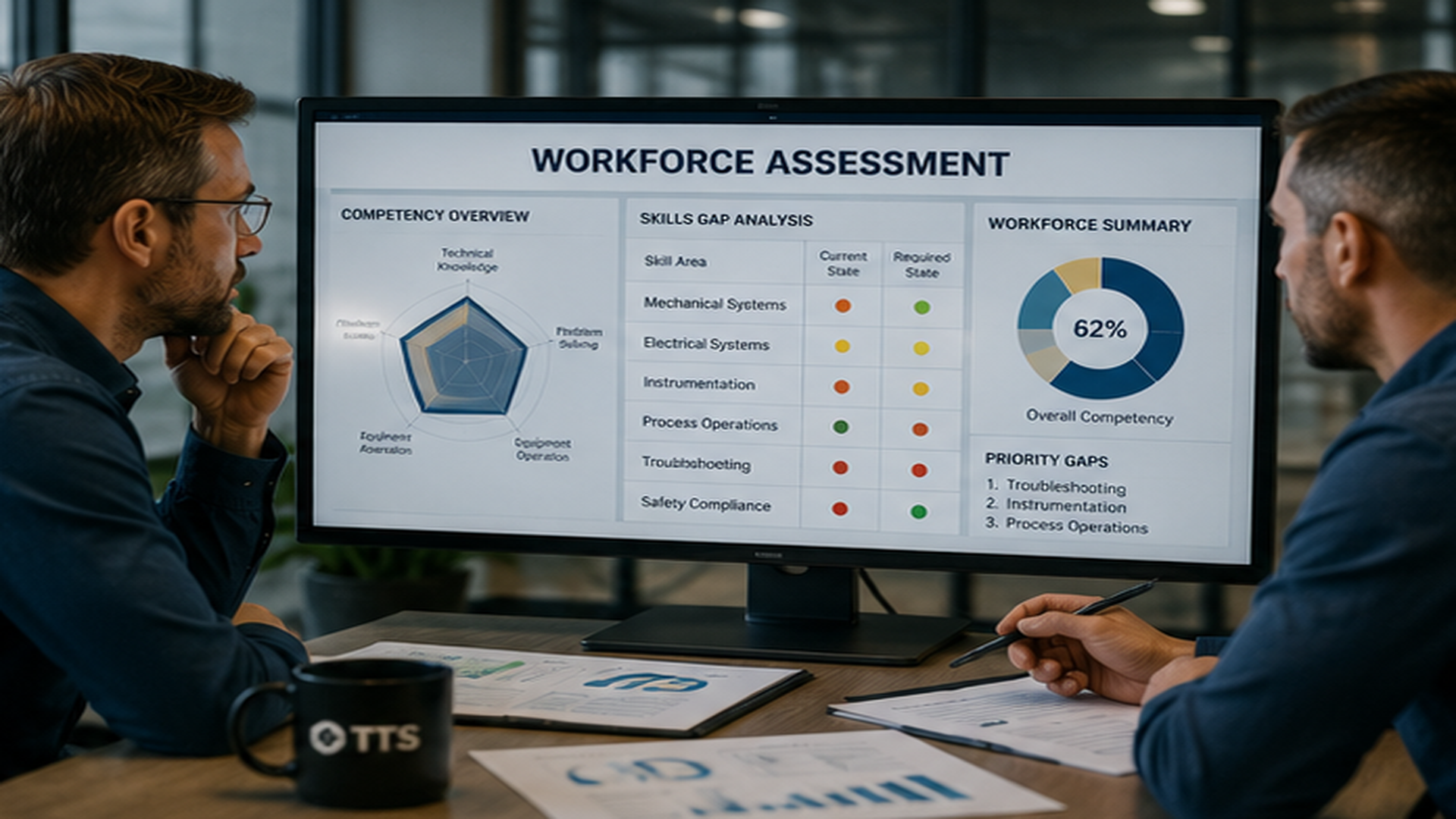
Why Reliability Depends on Workforce Capability
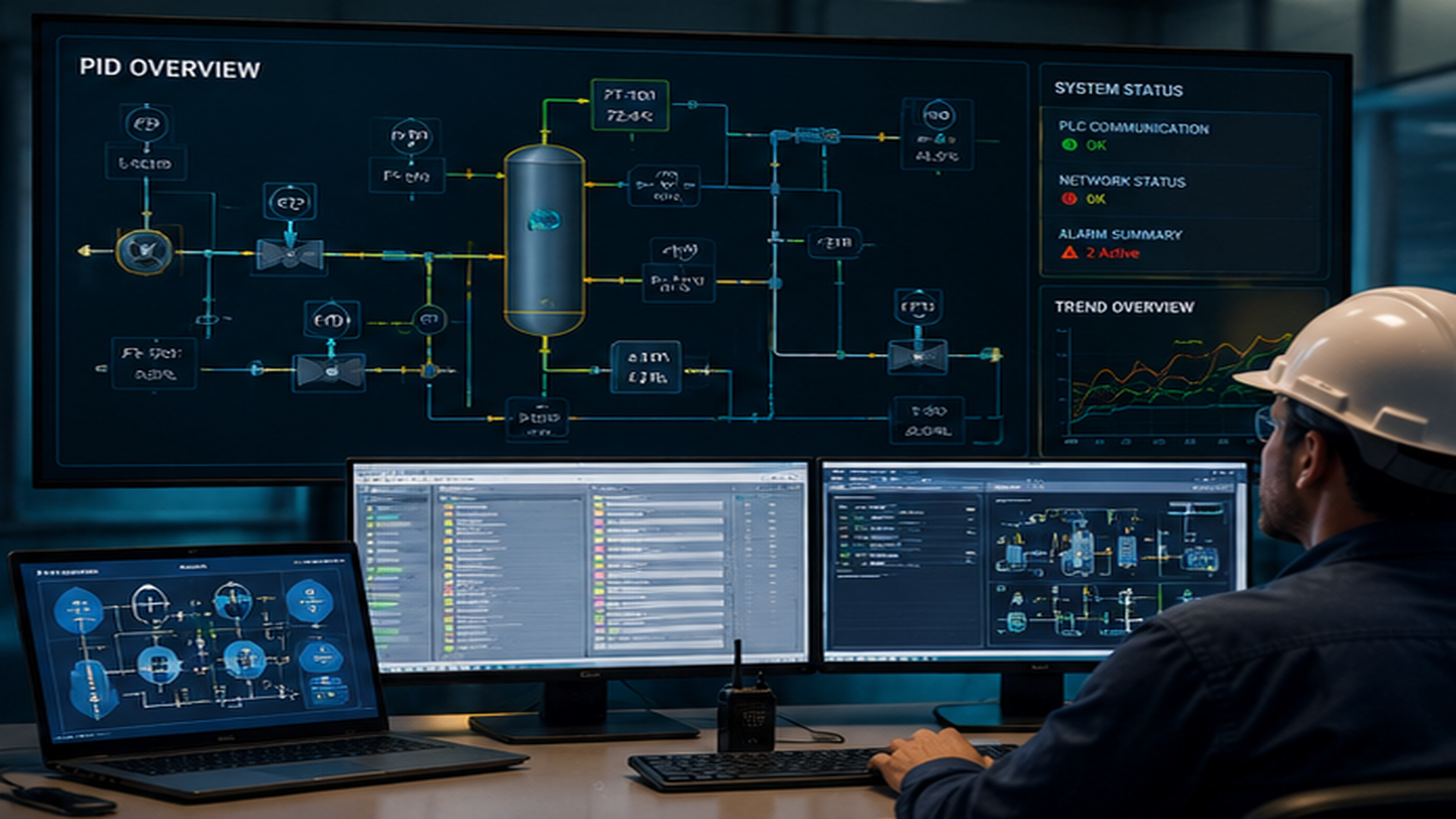
Every reliability engineering framework — RCM, TPM, FRACAS — eventually arrives at the same constraint: the people executing the maintenance strategy. A well-designed PM program fails when technicians do not understand the failure modes it is designed to prevent. A condition monitoring system fails when operators cannot distinguish a developing fault from normal process variation.
Human performance is not a soft variable in reliability. It is the single most controllable determinant of whether a maintenance strategy produces its designed outcomes.
Common Maintenance Training Gaps in Industrial Facilities
- Reactive maintenance culture where technicians are rewarded for speed of repair, not prevention.
- Inconsistent troubleshooting approaches that produce unpredictable diagnostic times and outcomes.
- Weak onboarding that places new technicians on complex equipment before they have sufficient foundation.
- Tribal knowledge dependency where critical diagnostic capability is concentrated in one or two individuals.
Core Components of Effective Maintenance Training
- Equipment fundamentals: The physics of how each major asset type operates, fails, and is maintained.
- Troubleshooting: Structured diagnostic logic that produces consistent outcomes regardless of which technician responds.
- SOP adherence: Procedure-based maintenance execution that eliminates variation in how PM tasks are performed.
- Predictive maintenance awareness: Basic vibration analysis, thermography interpretation, and oil analysis fundamentals.
- Safety procedures: LOTO, confined space, elevated work, and electrical safety as non-negotiable baseline competencies.
How Training Reduces MTTR and Improves MTBF
| Maintenance KPI | Training Impact | Mechanism |
|
MTTR (Mean Time to Repair) |
Reduced by 20–40% | Structured troubleshooting logic replaces guesswork |
|
MTBF (Mean Time Between Failures) |
Increased |
PM execution quality improves; failure modes addressed earlier |
|
Repeat failures |
Reduced |
Root-cause discipline replaces symptom treatment |
|
Downtime hours |
Lowered |
Faster diagnosis and consistent repair quality |
| Contractor dependency | Reduced |
Internal capability replaces outsourced technical response |
Example: Reliability Improvement Through Structured Maintenance Training
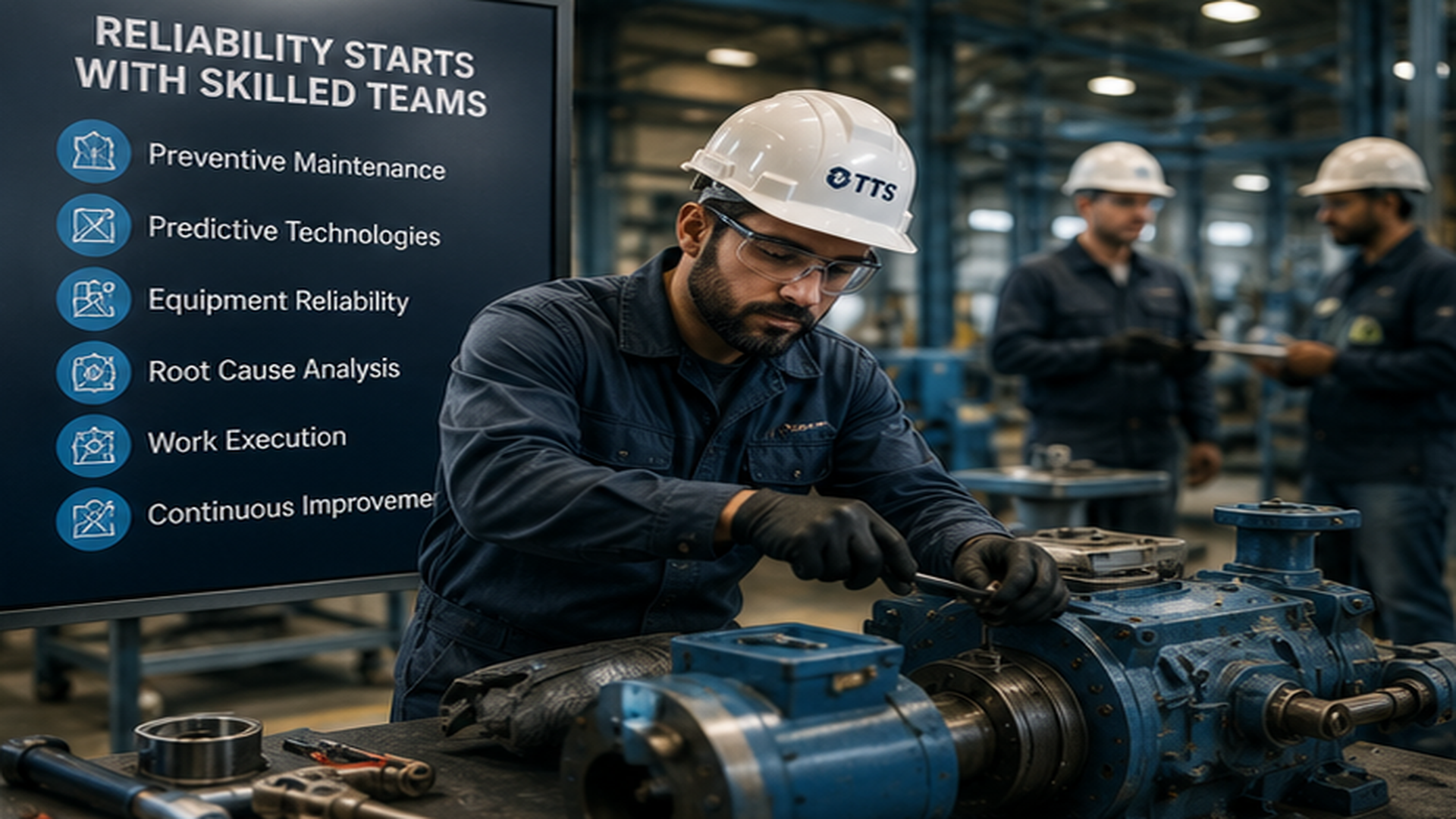
TTS develops structured maintenance workforce training programs aligned with operational goals, plant equipment, and workforce readiness initiatives. At a food processing facility experiencing chronic pump and conveyor failures, a targeted maintenance training program focused on lubrication fundamentals, bearing installation practices, and alignment procedures reduced repeat equipment failures by 44% within the first six months.
The training did not introduce new technology. It ensured that the maintenance team understood and consistently applied the procedures they already had.
Frequently Asked Questions
How does maintenance training improve uptime?
By building the technical competency required to execute PM tasks correctly, diagnose failures faster, and address root causes rather than symptoms.
What should be included in maintenance workforce training?
Equipment fundamentals, troubleshooting logic, SOP adherence, predictive maintenance awareness, and safety procedures.
What KPIs improve through maintenance training?
MTTR, MTBF, repeat failure rate, downtime hours, and contractor dependency are the most directly affected performance indicators.
How do companies reduce maintenance-related downtime?
Through structured training programs that build consistent troubleshooting and PM execution capability across the entire maintenance team — not just the most experienced technicians.